
NDE-compatible digital heritage. Connecting collections and stories.
Heritage collections hold a wealth of objects, sources and stories. Yet the information is often scattered across systems and organisations. We help make it discoverable, connected and reusable, in line with the principles of the Dutch Digital Heritage Network (NDE, or Netwerk Digitaal Erfgoed).
heritageshared at the source
NDE compatibility does not start with a new system.
A museum has a collection management system. An archive has catalogue records. A local history society has photographs and stories. But can these sources find and complement one another?
The National Digital Heritage Strategy 2025–2028 and the Digital Heritage Reference Architecture (DERA) provide a shared foundation. The aim is not to put everything in one central database, but to publish heritage information at the source, using common standards and agreements.
We translate these principles into practical improvements to your existing systems, data, integrations and public-facing digital services.
Not more disconnected platforms. Heritage information that others can actually use.
The idea behind a connected heritage networkSix building blocks for connected heritage.
NDE compatibility is not a ready-made software package. It is about how you manage, describe and share collection information. These are the building blocks we work with in practice.
Strategy & DERA
We turn the national strategy and architectural principles into choices that fit your organisation, suppliers and digital ambitions.
National strategyLinked Open Data
Open, machine-readable data, published using standards such as RDF or schema.org with JSON-LD, allows objects and knowledge sources to be linked.
More about Linked Open DataPersistent identifiers
A persistent identifier (PID) gives an object a stable reference. Links to your collection remain reliable even when the underlying systems change.
The NDE frameworkTermennetwerk (Vocabulary Network)
Linking people, places, objects and concepts to shared vocabularies makes descriptions more consistent and data easier to connect.
Explore the TermennetwerkDatasetregister (Dataset Registry)
Describing your dataset and registering it in the national registry helps researchers, developers and digital services discover it.
Explore the DatasetregisterIIIF & image access
IIIF makes images more accessible and interoperable, supporting image viewers, research and new digital applications.
About the IIIF standardWorth knowing: many collection management systems already support some of these capabilities. We first examine what your current systems and integrations can do before recommending custom development or replacement.
It only works when everyone can participate.
The national infrastructure depends on collaboration between heritage organisations, software suppliers, digital service providers and supporting partners. Not everyone needs to build everything themselves.
We bridge the gap between an organisation’s heritage goals and the technology needed to achieve them.
Heritage organisations
Manage collections, improve metadata, use shared vocabularies and identifiers, and make heritage information available at the source.
Collection management system suppliers
Support open standards, linked data, integrations and data export capabilities.
Digital service platforms
Use shared data to create search experiences, thematic platforms, interactive maps and stories for the public.
Network partners & funders
Support shared agreements, knowledge exchange, common services and the development of digital infrastructure.
From ambition to a working solution.
No abstract strategy report left sitting on a shelf. We assess what is already in place, identify what is needed and help deliver it. Our approach aligns with the Dutch Digital Heritage Guide (Wegwijzer digitaal erfgoed).
Goals & information plan
What do you want to achieve for visitors, researchers, collection managers and partners? We set priorities and define a realistic path forward.
Data & sustainability
We assess descriptions, file formats, metadata, rights and the long-term preservation and management of information.
Systems & integrations
We review your collection management system, APIs and export options. Where needed, we help define requirements, select a system or extend existing software in line with relevant NDE standards.
Connect & publish
Where appropriate, we implement PIDs, shared vocabularies, JSON-LD, Linked Open Data (RDF and, if relevant, SPARQL), IIIF and registration in the Datasetregister.
Make accessible & improve
We make information usable in public-facing platforms and ensure that ongoing maintenance and improvement remain manageable.
You do not need to take all five steps at once. A focused assessment or technical pilot can be a good place to start.
Open standards. Real-world applications.
We combine heritage and information architecture expertise with UX design and software development. These projects show how that comes together.
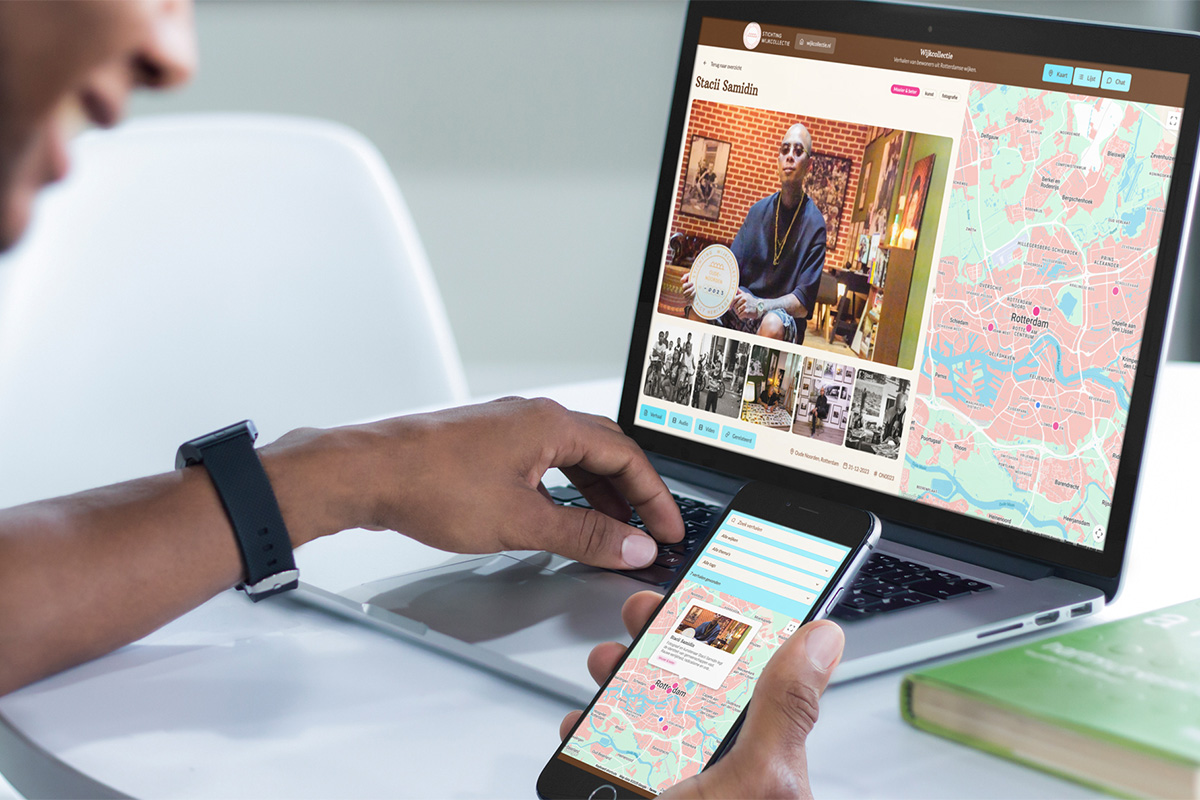
Stichting Wijkcollectie
For Stichting Wijkcollectie, we developed a CMS and a public platform where neighbourhood stories from Rotterdam can be explored on an interactive map. Its architecture takes NDE principles into account, including structured, reusable collection data.
Explore the platform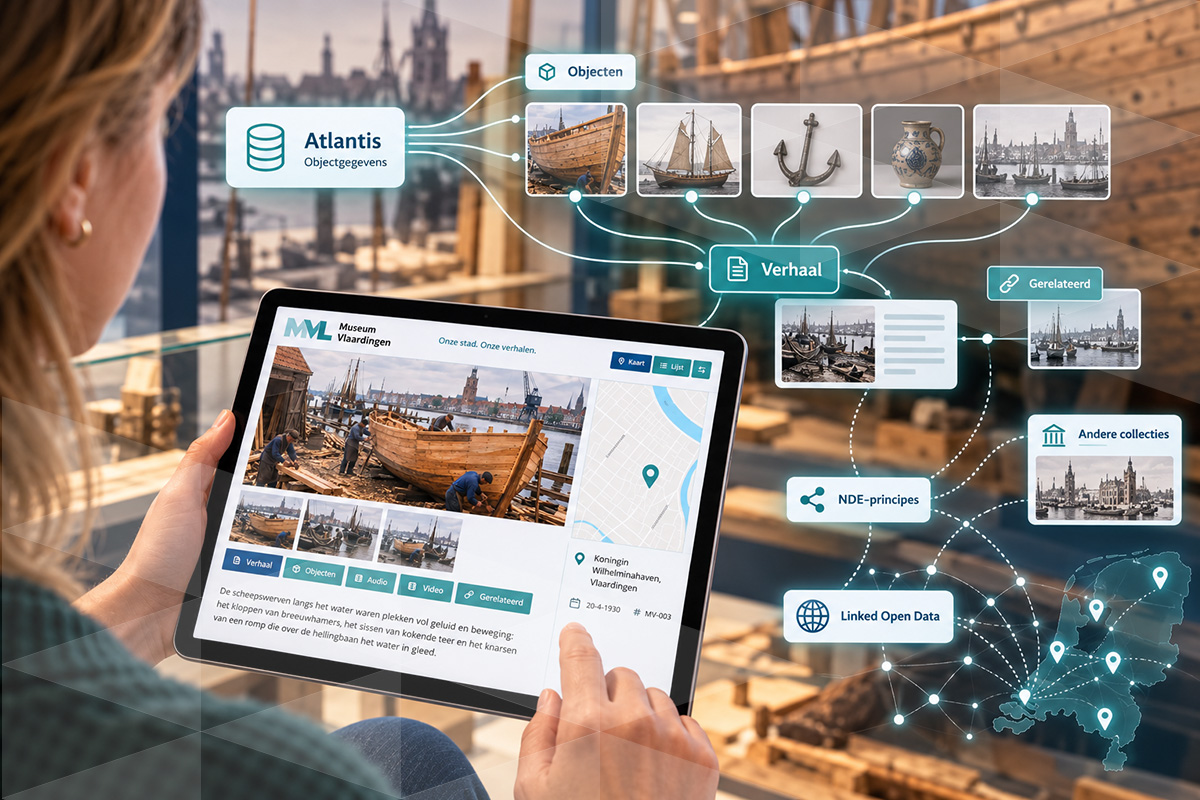
Museum Vlaardingen
For Museum Vlaardingen, we are working on digital access to objects from the museum collection. An integration with Atlantis makes object data available for individual object pages, with attention to NDE principles and Linked Open Data.
Discuss collection accessFrom making collections accessible to digital storytelling, interactive routes and new visitor experiences.
From separate collections to connected knowledge.
When heritage information is published at the source and meaningfully linked, researchers and public platforms can discover connections that would otherwise remain hidden.
National frameworks and practical resources.
For more detail, these resources from the Dutch Digital Heritage Network and the underlying standards offer useful guidance.
Practical questions. Clear answers.
Every heritage organisation starts from a different position. Often, a focused first step makes more sense than a large-scale systems overhaul.
Do we need to become fully NDE-compatible straight away?
No. You can work step by step on persistent identifiers, shared vocabularies, linked data publication, IIIF and a dataset description. We examine what you already have and which next step will deliver the most value.
Do we need to replace our collection management system?
Not necessarily. Many systems already support standards relevant to NDE or offer extensions and APIs. We assess the possibilities of your existing system before recommending a replacement.
What is the difference between NDE and Linked Open Data?
NDE is the Dutch network working on national digital heritage strategy, agreements and shared services. Linked Open Data is one important way of connecting machine-readable information from different sources. It is a building block within a broader approach.
Can you help with just one technical integration?
Yes. We can advise on the overall approach or deliver a clearly scoped integration, JSON-LD publication, API, prototype or connection to relevant shared services.
Is NDE compatibility an official certification?
No. The term refers to working according to shared NDE agreements and standards, not to a single universal certificate for an entire organisation. The relevant requirements depend on your systems, data and role within the network.